
Sound Immission Forecast
Modelling of sound propagation with consideration of turbines, operating modes, terrain and receptors.
Identify environmental effects early
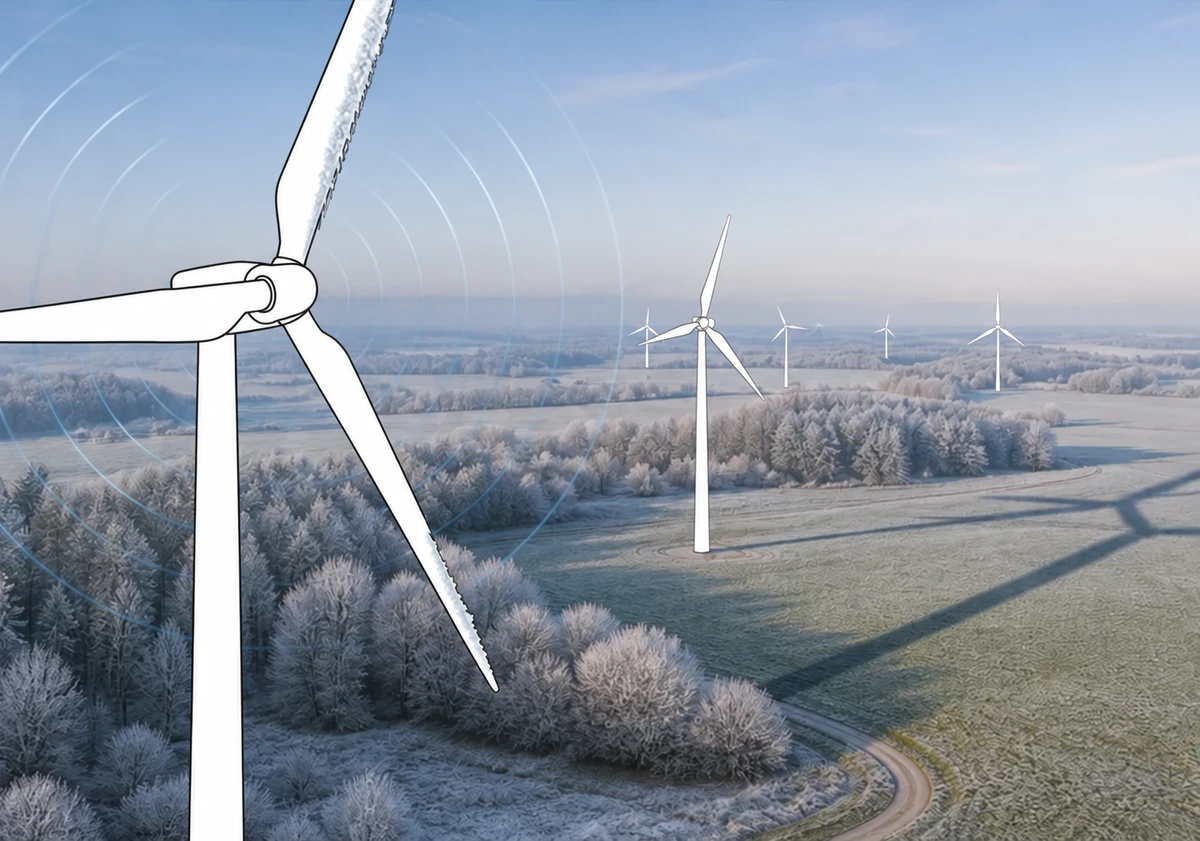
We assess project- and site-specific effects from sound, periodic shadow flicker, ice fall and ice throw and develop robust planning and operating options.
The objective
Emissions are integral to a project: they affect approval, wind-farm layout, operation and acceptance. An integrated assessment reveals competing objectives and creates a common basis for planning, communication with authorities and operation.
Scope of services
We combine the modules to suit the project phase, from a focused individual assessment to an integrated analysis.
Modelling of sound propagation with consideration of turbines, operating modes, terrain and receptors.
Assessment of existing and planned sources to provide a realistic view of the combined effect.
Determination of potential and expected exposure times at relevant receptors over the course of a year.
Development of transparent operating strategies to meet project-specific requirements.
Site- and turbine-specific risk assessment for transport routes, work areas and sensitive uses.
Assessment of detection, shutdown, restart, signage and organisational measures as an integrated concept.
Project process
Receptors, routes, uses, existing exposure and project-specific requirements are recorded in full.
We model relevant turbine configurations, operating modes and meteorological conditions.
Results are evaluated spatially and over time, with uncertainties and competing objectives shown transparently.
Together we develop proportionate planning and operating options for the specific project.
What you receive
Missing data is not an obstacle. We identify gaps early and agree appropriate substitute assumptions or additions with you.
Frequently asked questions
Yes, at least during variant planning. Measures in one area can affect yield, loads or other environmental effects. An integrated view prevents competing objectives from emerging later.
Yes. Reasons may include new neighbouring turbines, changed operating modes, complaints, repowering or the optimisation of existing protection concepts.
No. Depending on the issue, options include layout adjustments, operating modes, sectoral or time-based control, monitoring and organisational measures.
Next step